Newborn Clothing: What to Actually Buy, How Many You Need, and Why Sizes Make No Sense
Every parent overbuys newborn clothes. Here is exactly what your baby actually needs, how many of each, and why none of the sizes match.
You will buy too many newborn clothes. I can say this with near-certainty because almost every parent does it. There is something deeply irresistible about tiny socks, miniature dungarees, and sleepsuits covered in ducks. You see them, your heart melts, and before you know it you have got a wardrobe that could dress triplets for a fortnight.
Then your baby arrives. And you discover that for the first few weeks, they basically live in one sleepsuit after another, and that gorgeous knitted cardigan your aunt bought sits unworn because getting a floppy newborn into anything with buttons feels like defusing a bomb. 😊
So here is the guide I wish someone had handed me before I panic-bought twelve matching outfits in "Tiny Baby" size. What you actually need, how many, and why the sizing labels are a beautiful, confusing lie.
Why Baby Sizes Make Absolutely No Sense
Before you buy a single vest, you need to know this: newborn clothing sizes are chaos. One brand's "Newborn" fits from birth to one month. Another brand's "Newborn" would be snug on a large cat. And then there is "First Size," "Tiny Baby," "Up to 7.5lbs," and "0-3 Months," all of which claim to be different things but overlap in baffling ways.
Here is the rough reality. Most full-term babies are between 6lb and 9lb at birth. The label "Newborn" typically covers up to about 10lb, which many babies reach within two to three weeks. "0-3 Months" is the sweet spot for most babies from roughly week two onwards. And "Up to 1 Month" is what shops call the in-between size that nobody stocks enough of.
The practical takeaway? Do not go all-in on "Newborn" size. Buy a handful of pieces in that size and the rest in 0-3 Months. If your baby is on the smaller side, you will use the newborn bits. If they arrive at 9lb (hello, big bubba), they will skip straight to 0-3 and you will be glad you did not fill a drawer with clothes they never wore.
The Only Clothes You Actually Need
Right then. Let us strip it back to what your baby genuinely needs in those first few weeks. This is the no-frills, actually-useful list.
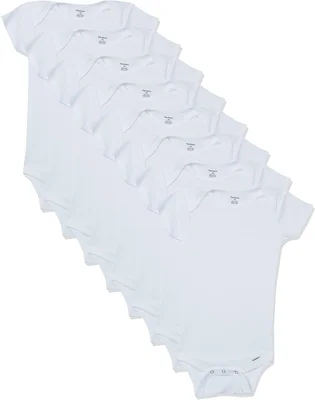
Bodysuits (aka Vests): 6 to 8
Bodysuits are the foundation of everything. They go under sleepsuits, under outfits, or on their own when it is warm. The ones with envelope necks (those overlapping shoulder flaps) are worth their weight in gold because they pull down over the body instead of over the head, which is a lifesaver during nappy explosions. Trust me on that one.
Short-sleeve for warmer months, long-sleeve for cooler ones. A multipack is your best friend here.

Sleepsuits (aka Babygrows): 6 to 8
This is what your baby will wear about 90% of the time. Day. Night. Visitors. Quick trip to the shops. Sleepsuits do it all. Look for ones with a two-way zip rather than poppers, because at 3am when you are changing a nappy in the dark, the last thing you need is to re-align twelve tiny press studs while your baby screams.
Footed sleepsuits mean you do not need to worry about socks falling off. Mitten cuffs that fold over are a bonus for newborns who like to scratch their own faces.
A Couple of "Going Out" Outfits: 2 to 3
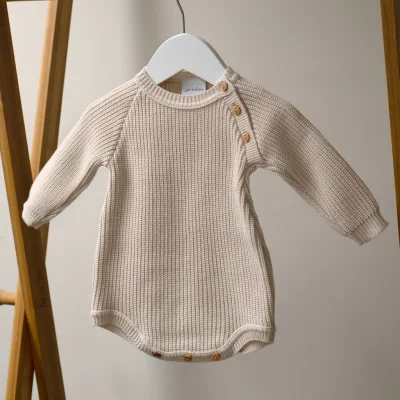
Will your baby care whether they are wearing a sleepsuit or a knitted romper to meet the grandparents? Absolutely not. Will you want at least one or two slightly nicer outfits for photos and first outings? Probably yes. And that is completely fine.
A soft knitted romper or a dungaree-and-top set is perfect for this. Nothing with too many buttons, nothing that needs to go over the head, and nothing dry-clean-only (because something will get sicked on within the first twenty minutes).

Hats, Socks, and Scratch Mitts
Newborns lose heat through their heads, so a couple of soft cotton hats are worth having for the first week or two, especially if you are leaving the hospital in cooler weather. After that, indoor hats are usually unnecessary unless your house is genuinely cold.
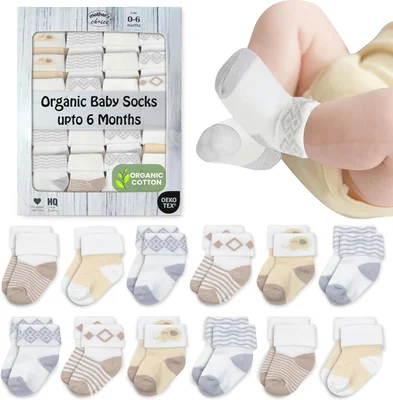
Socks are a bit of a running joke among parents because they fall off constantly. Buy a pack of 10 or 12, accept that you will lose half of them to the washing machine void, and move on with your life. Scratch mitts are useful for the first couple of weeks if your baby has sharp little nails, but most parents stop using them fairly quickly.
What You Can Safely Skip
Here is permission to not buy these things:
- Shoes. Your baby cannot walk. Soft-soled booties are cute but fall off constantly. Footed sleepsuits have got you covered.
- Jeans. Baby jeans exist and they are adorable, but they are also stiff, uncomfortable, and a nightmare to get on and off.
- Anything with a hood for sleeping. Safe sleep guidelines say no hoods, no hats in the cot. Save hooded items for daytime.
- Lots of "Newborn" size pieces. You will be out of them in a heartbeat. Two or three is plenty.
- Elaborate outfits with multiple pieces. A three-piece set looks lovely on the hanger. It feels a lot less lovely when you are wrestling a wriggling baby into a waistcoat.
Fabric, Labels, and the Washing Situation
Cotton is king for newborn skin. It is soft, breathable, and washes well. Organic cotton is lovely if your budget stretches to it, but standard cotton is perfectly fine too. Avoid anything scratchy, heavily dyed, or synthetic against their skin, especially in the early weeks when everything is so new and sensitive. 🌱
Always, always wash new clothes before your baby wears them. A 30 or 40 degree cycle with a gentle, fragrance-free detergent is all you need. Some parents swear by specific "baby" detergents, but most standard non-bio options work perfectly well. Cut out any labels that might irritate their skin, or look for brands that print labels directly onto the fabric.
And here is a tip nobody tells you: buy a mesh laundry bag for tiny socks and mitts. They vanish in a regular wash cycle. The bag keeps them together and saves you from the "where is the other sock" spiral that will otherwise consume your entire maternity leave.
The Quick Newborn Wardrobe Checklist
- 6-8 bodysuits (mix of newborn and 0-3 months)
- 6-8 sleepsuits (mostly 0-3 months)
- 2-3 nicer outfits for going out
- 2 cotton hats
- 10-12 pairs of socks
- 2-3 cardigans or zip-up layers
- 2 pairs of scratch mitts
- 1 outdoor suit or pramsuit (weather dependent)
That is it. That is genuinely all you need. Everything else is a bonus, and if people want to buy you cute outfits as gifts, let them. Just make sure they buy the next size up.
One Last Honest Note
If you have already gone overboard, do not feel bad about it. We all do it. Those tiny knitted booties sparking joy in your drawer are not a waste. They are proof that you were excited about meeting your baby, and that is a wonderful thing.
But if you are still in the planning stage, this list will save you money, drawer space, and the vague guilt of unused clothing with the tags still on. Stick to the basics, buy most things in 0-3 months, and spend the rest of your budget on the stuff that actually makes the early weeks easier.
Want to add your newborn clothing essentials to a shareable wishlist? Create your BubsNest registry and let friends and family chip in on the bits that matter.
Ready to Create Your Baby Registry?
Start your free baby registry today and share it with friends and family.
Get Started Free