Reading to Your Baby: When to Start, Why It Matters, and the Books They'll Love
Your baby has been listening to your voice since before they were born. Here is why reading aloud from day one is one of the simplest, loveliest things you can do together.
Here is a fact that might stop you in your tracks: your newborn already knows your voice. They have been listening to it, muffled and warm, for months before they arrived. And from the very first day you bring them home, reading aloud to them is one of the simplest, loveliest things you can do together.
Not because it will turn them into a tiny genius. Not because Instagram told you to. But because your voice is their favourite sound in the entire world, and wrapping it around words and stories creates connections in their brain that nothing else quite replicates. 📖
When Should You Start?
From birth. Genuinely, from birth. There is no "too early" here.
Your newborn cannot follow a plot or appreciate a cliffhanger, obviously. But they can hear rhythm, tone, and the rise and fall of language. Research from the American Academy of Pediatrics found that reading aloud from infancy strengthens the neural pathways responsible for language development. In plain English? The more words your baby hears spoken directly to them, the better their brain gets at processing language.
And before you panic that you should have started yesterday, know this: the best time to start is always right now. Whether your baby is three days old or ten months old, picking up a book tonight counts.
Why It Actually Matters
Reading to a baby is not about the words on the page. Not at first. It is about three things that happen every time you sit together with a book.
- Bonding. Holding your baby close, speaking softly, making eye contact. Reading naturally creates all the conditions for secure attachment. It is basically a cuddle with a soundtrack.
- Language building. Babies who are read to regularly hear a wider variety of words than babies who are only spoken to in conversation. Books use words you would never say out loud to a six month old ("magnificent", "enormous", "mischievous"), and that variety matters.
- Routine and calm. A short book before bed becomes a signal. Wind down, slow your breathing, get cosy. It works as well for you as it does for them, honestly.
The magic is not in the specific book you choose. It is in the doing of it, consistently, even if "consistently" means four nights out of seven because life happened on the other three.
What Actually Counts as "Reading"
This is important because a lot of parents feel silly reading Goldilocks to a two week old who is clearly asleep. So let us be clear: at the baby stage, "reading" means any of these things.
- Reading the actual words on the page (classic approach, works beautifully)
- Describing the pictures - "Look, a big red bus! Can you see the wheels?"
- Making up your own version entirely
- Singing the words instead of speaking them
- Just pointing at things and naming them
You cannot do it wrong. If you are holding a book and talking, you are doing it right. Your baby does not care about your dramatic range or whether you are doing the voices properly. They care that you are there.

The Best Books by Age
Birth to 3 Months: Keep It Simple
Your newborn can only see about 20-30cm in front of their face, and they see high contrast patterns best. Bold black and white images, simple shapes, and strong outlines are what catches their attention at this stage.
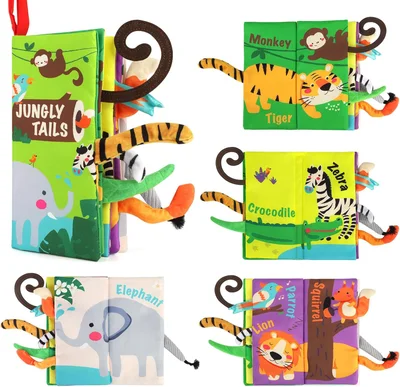
Cloth and crinkle books are brilliant here too. They are soft enough for tummy time, they make satisfying noises, and they survive being gummed on, dribbled on, and flung across the room. At this age the book is as much a sensory toy as it is a reading experience, and that is absolutely fine.

Honestly, at this stage you could also just read aloud from whatever you are reading yourself. A novel, a magazine, the back of a cereal box. Your newborn does not care about content. They care about your voice.
3 to 6 Months: Touch and Feel
Around three months, your baby starts reaching for things, grabbing at textures, and showing genuine interest in what is in front of them. This is when touchy-feely books come into their own.
The "That's Not My..." series by Usborne is practically a rite of passage at this age. Each page has a different texture (rough, bumpy, fuzzy, silky) and ends with "That IS my bunny, her ears are so soft." The repetition is brilliant for little brains, and babies absolutely love running their fingers over the textured patches. Or licking them. Both valid responses. 🐰
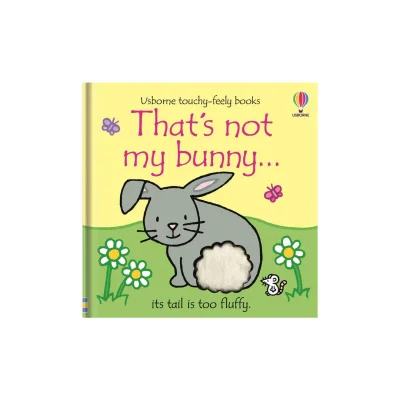
Board books become essential here too because your baby will chew them, bend them, and slam them enthusiastically onto the floor. Paper pages do not survive this phase. Board books do, mostly.
6 to 12 Months: Lift the Flap and Interactive
This is when reading starts to feel properly interactive. Your baby can sit up, point at things, and anticipate what comes next. Lift-the-flap books are absolute gold at this stage because the element of surprise ("Who is behind that door? It is a LION!") delights them every single time. Even the fifteenth time.
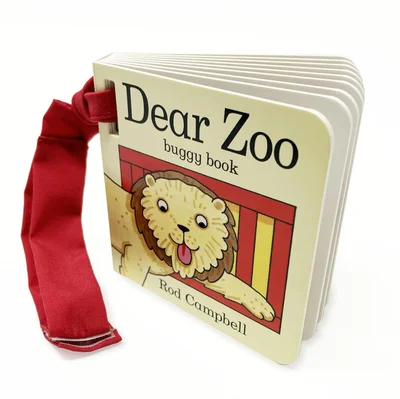
Dear Zoo is the classic for a reason. Every page has a flap, every flap has an animal, and your baby will shriek with joy when they lift it. Simple, repetitive text means they start to anticipate the pattern, which is one of the earliest pre-reading skills developing right before your eyes.
At this age, also look for books with things to press, pull, slide, or spin. Anything that rewards their curiosity and makes them want to turn the page.
Making It a Habit (Without the Guilt)
Bedtime reading gets all the glory, but honestly? The best reading time is whatever time works for you. After a nap. During a feed. On the bus. While waiting for the kettle to boil. Five minutes is plenty. Two minutes is plenty. One page counts.
Some practical tips that actually help:
- Keep books everywhere. By the changing mat, in the car seat pocket, next to the feeding chair. If they are within reach, you will pick them up more often.
- Re-read favourites. Babies LOVE repetition. If they want "That's Not My Dinosaur" for the seventh time today, that is their brain saying "I am learning something here, keep going."
- Follow their lead. If they want to skip pages, chew the corner, or close the book after thirty seconds, that is fine. They are still learning how books work.
- Include everyone. Partners, grandparents, siblings, anyone who is willing. Different voices reading the same book is wonderful for language development.
And on the days when you are too tired, too touched-out, or simply cannot face reading "Each Peach Pear Plum" one more time? Skip it. Miss a night. Miss a week. Reading to your baby should feel like a treat, not a test. There is no failure here, only a pause.
Building Their First Library
You do not need dozens of books to start. Five or six good ones, rotated regularly, will keep a baby happy for months. Board books survive the drool phase. Cloth books are brilliant for the pushchair. And lift-the-flap books will be adored until the flaps inevitably get torn off (this is normal, this is fine, this is just love expressed through destruction).
If you are building a registry, books make wonderful additions. They are affordable, they are personal, and people genuinely enjoy choosing them. You can add your favourites to your BubsNest wishlist so family and friends know exactly which ones to grab.
The most important book in your baby's life is not the most expensive or the most educational. It is the one you pick up tonight, pull them onto your lap, and read together. That is it. That is the whole secret. 💛
Ready to Create Your Baby Registry?
Start your free baby registry today and share it with friends and family.
Get Started Free