Swaddles vs Sleep Bags: What Your Baby Actually Needs at Each Stage
Confused about swaddles, sleeping bags, and when to switch? Here is your stage-by-stage guide to keeping your baby snug, safe, and actually sleeping.
What is a tog? How many swaddles do you actually need? When do you stop swaddling and start using a sleeping bag? And is there something that bridges the gap between the two?
If you have found yourself standing in a baby shop staring at rows of nearly identical fabric pouches wondering what on earth the difference is, you are in very good company. Baby sleep products are one of those corners of parenting where the jargon is dense, the options are endless, and the stakes feel high because, well, sleep.
Here is the honest truth: it is simpler than it looks. Your baby really only needs the right thing at the right stage. So let us walk through exactly what that means. \U0001F31F
Stage One: The Swaddle (Birth to Around 8 Weeks)
Swaddling is one of the oldest tricks in the parenting book, and it works because newborns are used to being tightly contained. After nine months curled up in a very snug space, being placed in an open cot can feel startling. Literally. The Moro reflex (that sudden arm-flinging startle your baby does in their sleep) wakes them up constantly, and a good swaddle keeps those little arms tucked in so everyone gets more rest.
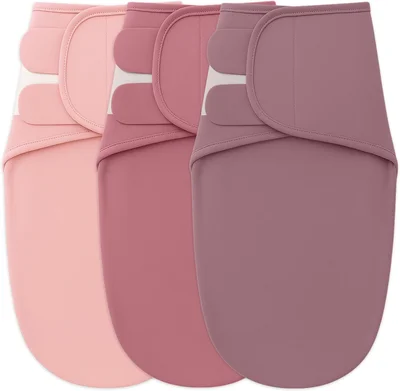
A swaddle is simply a large square or rectangular piece of fabric that you wrap around your baby. Some are plain muslin squares you fold yourself. Others come with poppers, velcro, or zip fastenings that make the whole process less like origami at 2am.
What to look for in a swaddle
- Breathable fabric - muslin or organic cotton are ideal. You want air to circulate.
- The right size - too small and you cannot get a snug wrap. Too large and it comes loose (which is a safety risk).
- Hip-healthy design - the wrap should be snug around the chest and arms but loose around the hips and legs. Baby needs to be able to bend and kick freely at the hip.
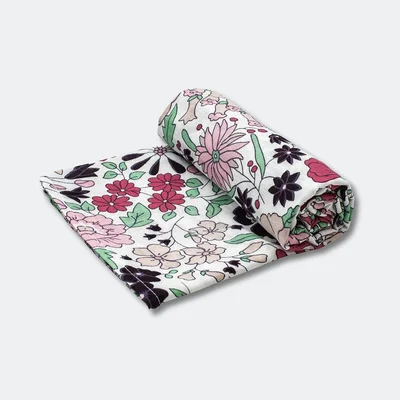

Muslin swaddles double as everything else too. Burp cloths, pram shades, emergency changing mats, impromptu picnic blankets. Buy more than you think you need. You will use every single one.

When to stop swaddling
The moment your baby starts showing signs of rolling, the swaddle needs to go. For most babies this happens somewhere between 8 weeks and 4 months, though some start earlier. Once they can roll onto their tummy, having their arms pinned is not safe. This is non-negotiable, even if the swaddle is the only thing getting you more than forty minutes of consecutive sleep.
You will know. They will start wriggling out of it, or you will spot them trying to flip during tummy time. That is your cue.
The Tricky Bit: Transitioning Out of the Swaddle
This is the stage that strikes genuine fear into sleep-deprived parents. Your baby loves being swaddled. You love that they love it. And now you have to take it away?
A few approaches that actually work:
- One arm out first. Swaddle with one arm free for a few nights, then both arms out, then move to a sleeping bag. Gradual and gentle.
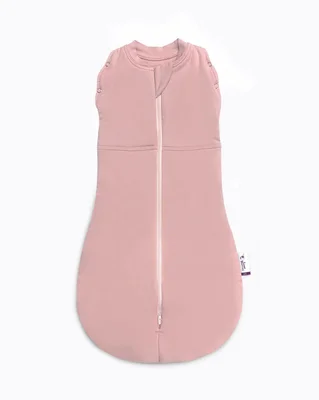
- The transitional swaddle-bag. These clever products are part swaddle, part sleeping bag. Arms can be in or out, so you can phase the transition at your baby's pace.
- Cold turkey. Some babies genuinely do not care. You stop swaddling, they sleep fine. If your baby is one of these, enjoy it and say nothing to other parents. \U0001F609
Stage Two: The Sleeping Bag (From Around 8 Weeks Onwards)
A baby sleeping bag (sometimes called a sleep sack) is essentially a wearable blanket. It zips up around your baby, keeps them at a consistent temperature, and cannot be kicked off at 3am leaving them cold and screaming.
That last point is the real selling feature. Loose blankets in a cot are not recommended for babies under 12 months because of the suffocation risk. A sleeping bag solves this completely. Your baby stays covered, stays warm, and stays safe.
Understanding tog ratings
Tog is a measure of thermal resistance, which is a fancy way of saying how warm the thing is. For baby sleeping bags, you will see three main ratings:
- 0.5 tog - for warm summer nights (24°C and above)
- 1.0 tog - for mild temperatures (20-24°C)
- 2.5 tog - for cooler rooms and winter (16-20°C)
The general rule: feel the back of your baby's neck. If it is warm and dry, they are fine. If it is sweaty, they are too hot. If it is cool, add a layer underneath. Hands and feet are unreliable indicators because babies often have cold extremities even when their core temperature is perfectly comfortable.
A room thermometer next to the cot is genuinely one of the most useful purchases you will make. They cost about three pounds and save you from the nightly "are they too hot or too cold" guessing game.

Getting the right size
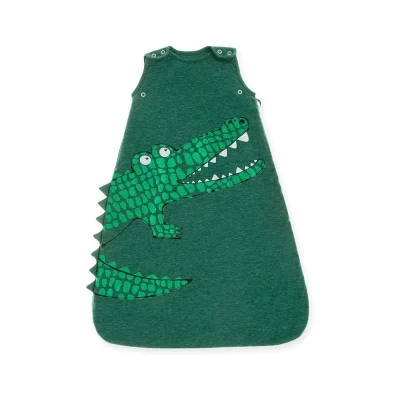
Sleeping bags come in sizes based on age ranges, typically 0-6 months, 6-18 months, and 18-36 months. The important thing is that the neck hole is small enough that your baby cannot slip down inside the bag. If their head can fit through the neck opening, the bag is too big.
Most brands size by weight as well as age, which is more reliable. A petite six-month-old and a chunky six-month-old are very different shapes. Check the weight guide on the label rather than just going by the age range.
The Quick Comparison
| Swaddle | Sleeping Bag | |
|---|---|---|
| Age range | Birth to rolling (roughly 8 weeks - 4 months) | From 8 weeks (or birth in some designs) to 3 years+ |
| Purpose | Contains the startle reflex, mimics the womb | Keeps baby warm without loose blankets |
| Arms | Tucked in (snug) | Free |
| Safety note | Stop once baby can roll | Correct size so baby cannot slip inside |
| Tog range | Usually lightweight (0.5 - 1.0 tog) | 0.5, 1.0, or 2.5 tog depending on season |
| Versatility | Doubles as muslin, burp cloth, pram shade | Single purpose (sleep) |
How Many Do You Actually Need?
For swaddles: at least three or four. They get spit up on, leaked on, and generally destroyed with impressive speed. If you are using plain muslin squares, grab a pack of five or six because you will use them for everything else too.
For sleeping bags: two is the sweet spot. One on, one in the wash. If you are on a budget, one is manageable if you time your laundry well. You will probably want two different tog ratings as the seasons change, so a 1.0 tog and a 2.5 tog covers most of the year in the UK.
Common Questions (Answered Quickly)
Can my baby wear clothes under a sleeping bag? Yes. A short-sleeved bodysuit under a 2.5 tog bag works for most room temperatures. In summer with a 0.5 tog bag, just a nappy might be enough. Check the brand's layering guide, most include one on the packaging.
What about arms-out swaddles? These exist and are basically sleeping bags with a snugger fit around the torso. They are great for the transition period but are not true swaddles. Think of them as a halfway house.
Are weighted sleep sacks safe? Current guidance is cautious about weighted products for babies. Stick to standard sleeping bags unless your GP or health visitor has specifically suggested otherwise.
My baby hates being swaddled. Now what? Some babies genuinely dislike it, and that is fine. Skip straight to a sleeping bag. Not every baby needs to be swaddled, and forcing it when they are fighting it every single night helps nobody.
The Bottom Line
Swaddles are for the very early weeks when your newborn needs that womb-like snugness. Sleeping bags take over once they are ready for more freedom, and they will carry you all the way through to toddlerhood. The transition between the two does not have to be dramatic, especially if you use a transitional product to ease the shift.
The best approach? Start with a few good swaddles, have a sleeping bag ready for when the time comes, and do not overthink the tog ratings. Feel the back of their neck, check the room temperature, and trust your instincts. You have got this. \U0001F4AA
Ready to add sleep essentials to your registry? Create your BubsNest wishlist and let family and friends know exactly what you need.
Ready to Create Your Baby Registry?
Start your free baby registry today and share it with friends and family.
Get Started Free