Swaddles vs Sleeping Bags: Which Does Your Baby Actually Need?
They look similar and live in the same aisle, but swaddles and sleeping bags do very different jobs at very different stages. Here is how to know which one your baby needs right now.
Here is something that catches most new parents off guard: swaddles and sleeping bags are not the same thing. They look similar, they live in the same aisle, and your registry will probably list them side by side like they are interchangeable. They are absolutely not.
A swaddle wraps your newborn snugly with their arms tucked in. A sleeping bag is a wearable blanket with armholes that gives them freedom to move. They serve different purposes, suit different stages, and getting the timing of the switch right can genuinely change how everyone in your house sleeps. So let us break it down. 🌙
What Swaddles Actually Do
In the first few weeks of life, your baby has a startle reflex (the Moro reflex, if you want to sound impressive at the health visitor appointment). Their arms fling out suddenly, their eyes snap open, and they wake themselves up. Repeatedly. At 2am. And 3am. And 4am.
A swaddle holds their arms close to their body, recreating that snug, contained feeling they had in the womb. It does not stop the reflex entirely, but it dampens it enough that they can often settle back to sleep without fully waking. For many parents, a good swaddle is the difference between a two-hour stretch and a four-hour one.
Swaddles come in two main styles. Traditional muslin wraps are just a large square of fabric that you fold and tuck around your baby. They take a bit of practice to get right, but once you have the technique down, they are incredibly versatile. You can adjust the tightness, use them as a burp cloth in a pinch, and they pack flat in a changing bag.
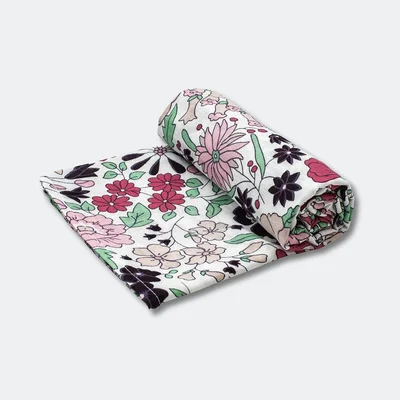

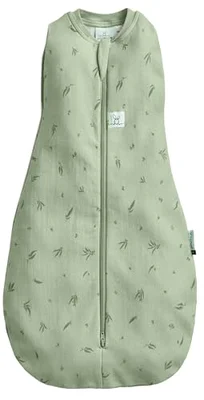
Then there are zip-up or velcro swaddle wraps, which take the origami out of the equation entirely. You pop baby in, zip up, done. These are brilliant for the sleep-deprived parent who cannot remember which fold goes where at midnight. Some designs also allow you to leave one or both arms out, which becomes important later.
What Sleeping Bags Do Differently
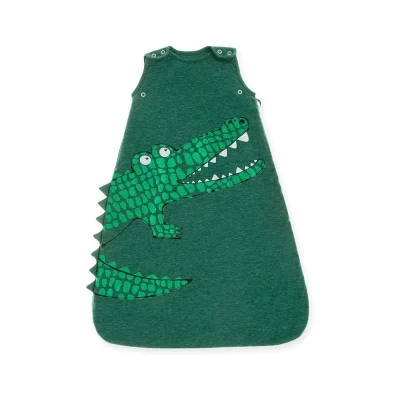
A sleeping bag (sometimes called a sleep sack) is essentially a wearable duvet with shoulder straps or sleeves. Your baby's arms are completely free, their legs have room to kick and bend, and the bag zips up around their torso to keep them warm without any loose blankets in the cot.
That last bit matters more than you might think. Safe sleep guidance is clear: no loose blankets, pillows, or duvets in the cot for babies under twelve months. A sleeping bag removes the worry entirely. It cannot ride up over their face, it cannot be kicked off and leave them cold, and it stays put all night long.
Sleeping bags are rated by TOG, which measures thermal resistance. The higher the TOG, the warmer the bag. Most parents need two ratings to cover the year: a 1.0 TOG for warmer months and a 2.5 TOG for autumn and winter. Some brands also make a 0.5 TOG for heatwaves and a 3.5 TOG for particularly draughty houses, but 1.0 and 2.5 will cover most British bedrooms.
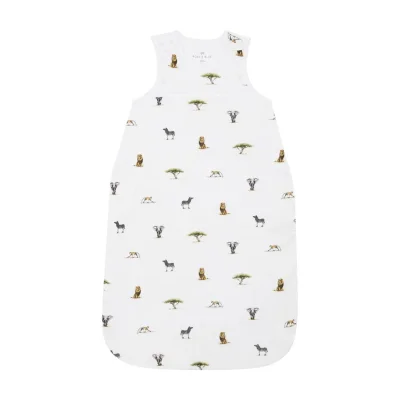
The other big advantage of sleeping bags is longevity. While swaddles have a shelf life of roughly four months, a good sleeping bag can take your baby from around eight weeks all the way through to two or three years old. Many brands make them in overlapping sizes (0-6 months, 6-18 months, 18-36 months) so your little one always has a bag that fits properly.
When to Make the Switch
This is the question that keeps parents up at night (sometimes literally). The answer is straightforward, even if the timing feels anything but.
You need to stop swaddling when your baby starts showing signs of rolling. For most babies, this happens somewhere between three and five months. Some early rollers will surprise you at eight weeks. Others will happily lie on their back until six months with zero interest in going anywhere. Watch your baby, not the calendar.
The signs to look for: they are lifting their head during tummy time, they are arching their back, they are starting to roll from back to side, or they have already made it all the way onto their tummy. Once any of these start happening, swaddling becomes unsafe because a swaddled baby who rolls onto their front cannot use their arms to push up and clear their airway.
The transition does not always go smoothly. Your baby has been sleeping in a cosy cocoon for weeks, and suddenly their arms are free and flailing around again. Some babies barely notice. Others will protest loudly for a few nights.
If the switch feels rocky, a transitional product can help bridge the gap. These clever designs start as a swaddle but let you unzip one arm at a time, so your baby adjusts gradually rather than going cold turkey.

TOG Ratings: A Quick Cheat Sheet
TOG ratings can feel confusing, but the principle is simple. Match the bag to the room temperature, then dress your baby in layers underneath.
Here is a rough guide:
- Room above 24°C: 0.5 TOG with just a nappy or a short-sleeved vest
- Room 21-23°C: 1.0 TOG with a short-sleeved bodysuit
- Room 18-20°C: 2.5 TOG with a long-sleeved bodysuit
- Room below 18°C: 2.5 TOG (or 3.5 if available) with a bodysuit and sleepsuit
The back of your baby's neck is the best place to check whether they are the right temperature. If it feels warm and dry, they are comfortable. If it feels sweaty, they are too hot. Hands and feet are not reliable indicators because babies often have cold extremities even when they are perfectly warm everywhere else.

Do You Need Both?
Honestly? Yes. If you are expecting a baby, put at least two swaddles and one sleeping bag on your registry. You will use the swaddles from day one and the sleeping bag from whenever your baby outgrows swaddling, which will happen sooner than you expect.
Some parents try to skip the swaddle stage entirely and go straight to sleeping bags from birth. This can work, especially if your baby does not have a strong startle reflex. But most newborns sleep noticeably better when swaddled for those first few months, so it is worth having the option.
The other thing worth knowing: you will probably want more than one of each. Babies are spectacularly talented at producing nappy leaks, spit-up incidents, and other mysterious overnight fluids that require an emergency sheet and bag change at 4am. Having a spare in the drawer means you are not doing laundry in the dark. 😅
The Short Version
Swaddles are for newborns. They calm the startle reflex, recreate that womb-like snugness, and help tiny babies sleep longer stretches. Use them from birth until your baby shows signs of rolling, usually around three to five months.
Sleeping bags take over from there. They keep your baby warm without loose blankets, they are rated by TOG so you can match them to the room temperature, and they last well into toddlerhood.
The transition between the two does not need to be dramatic. Watch for rolling cues, consider a transitional product if your baby struggles with the change, and remember that a few unsettled nights are completely normal. Your baby will adjust. You will too. And you will never go back to trying to keep a loose blanket on a wriggly six-month-old, because once you have experienced the simplicity of a sleeping bag, there is no return.
Ready to Create Your Baby Registry?
Start your free baby registry today and share it with friends and family.
Get Started Free