Baby-Led Weaning: The Messy, Brilliant Way to Introduce Solid Food
Forget the tiny jar and the aeroplane spoon. Baby-led weaning hands the food straight to your baby and lets them figure it out. Here is how it works, what to serve first, and why the mess is worth it.
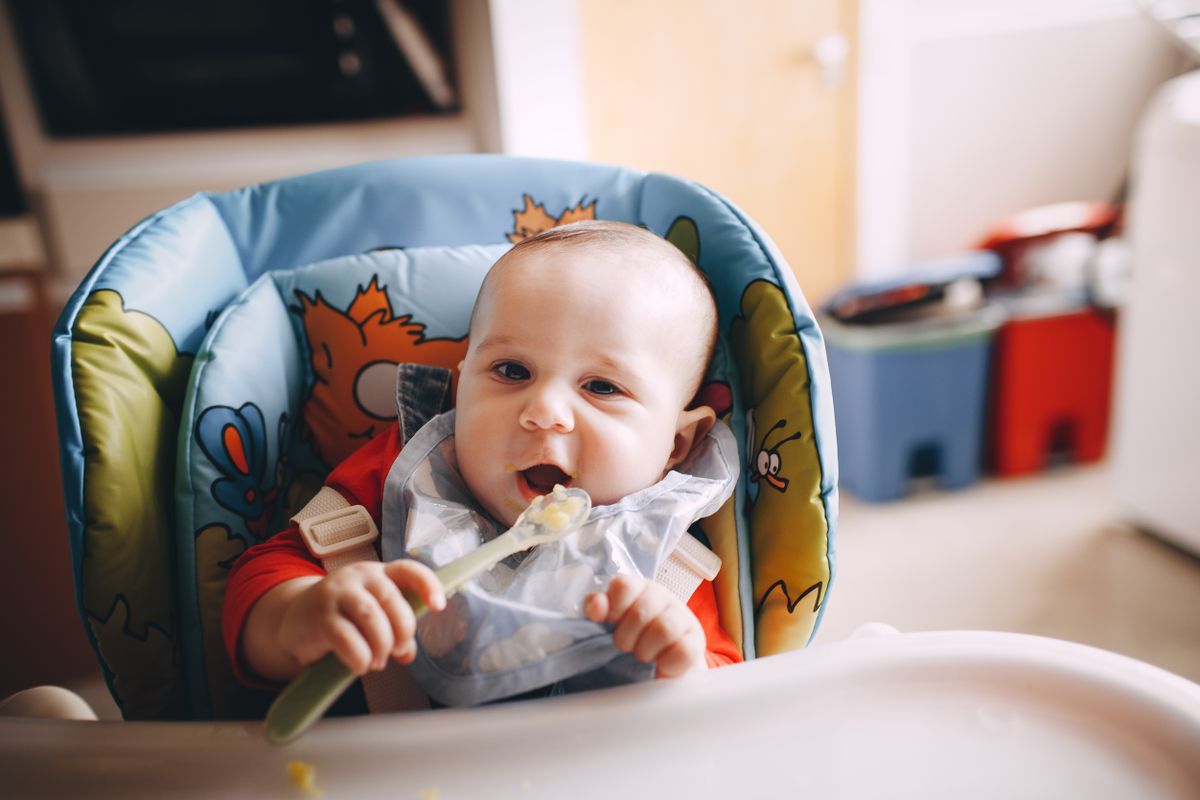
Picture this: your six-month-old sitting in a highchair, holding a strip of steamed broccoli in their fist, examining it like a tiny food critic at a Michelin restaurant. They sniff it. They squeeze it. They put it in their ear. Eventually, some of it reaches their mouth. They pull a face. They try again. And just like that, they are feeding themselves.
That is baby-led weaning in a nutshell. No purees, no pouches, no aeroplane spoon circling the landing strip. Just real food, cut into graspable shapes, placed in front of your baby, and a lot of trust that they will figure it out. Spoiler: they will. It just takes time, patience, and a very good bib. 🍎
What Is Baby-Led Weaning, Exactly?
Baby-led weaning (BLW) means skipping the puree stage entirely and offering your baby soft, whole foods from around six months. Instead of you loading a spoon and guiding it into their mouth, your baby picks up the food themselves, explores it at their own pace, and decides how much to eat.
The approach was popularised by Gill Rapley, a former health visitor and midwife, who argued that babies are perfectly capable of feeding themselves solid food from six months, as long as they can sit upright and have lost the tongue-thrust reflex. Her book has since become the unofficial BLW bible for parents across the UK.
The key principle is simple: your baby is in charge. You decide what food to offer. They decide whether to eat it, how much, and in what order. It sounds radical until you realise that is exactly how adults eat too.
When Can You Start?
The general recommendation is around six months, and your baby should be showing all three signs of readiness:
- They can sit up with little or no support and hold their head steady
- They can coordinate their hands to grab objects and bring them to their mouth
- They have lost the tongue-thrust reflex (they no longer automatically push food out of their mouth with their tongue)
Some babies hit all three signs at five and a half months. Some are closer to seven months. Both are perfectly normal. The signs matter more than the calendar.
What to Offer First
The beauty of BLW is that you do not need a special menu. You can offer most of what you are eating, as long as it is soft enough to squish between your finger and thumb, cut into grabbable shapes, and free of added salt, sugar and honey.
Good first foods include:
- Steamed vegetable sticks: broccoli florets, carrot batons, courgette strips, sweet potato wedges
- Soft fruit: ripe banana (leave some skin on for grip), ripe avocado, mango slices, soft pear
- Protein: slow-cooked meat strips, flaked fish (check for bones), scrambled egg, lentil patties
- Carbs: toast fingers, cooked pasta shapes, rice cakes, pitta bread strips
At six months, babies grab food in their fist, so you want pieces that are roughly finger-length with a bit poking out the top. As their pincer grip develops (usually around eight to nine months), you can offer smaller pieces like blueberries (halved), peas, and diced soft fruit.
The Big Question: Gagging vs Choking
This is the part that scares every parent, and understandably so. But gagging and choking are two very different things, and understanding the difference is what makes BLW feel manageable rather than terrifying.
Gagging is loud, dramatic, and safe. Your baby will cough, splutter, maybe retch, and their face might go red. It looks alarming, but it is their body doing exactly what it should: moving food away from the airway and back towards the front of the mouth. Babies have a very sensitive gag reflex that sits further forward on the tongue than in adults. This is actually a safety feature.
Choking is silent. Your baby cannot cough, cry or make noise because their airway is blocked. They may turn blue. This is a medical emergency.
Gagging happens regularly with BLW, especially in the first few weeks. Choking is rare, and research suggests that BLW babies are no more likely to choke than spoon-fed babies, as long as you follow the safety rules:
- Always supervise your baby while they eat. Always.
- Make sure they are sitting upright in a highchair, not reclined
- Avoid high-risk foods: whole grapes, whole cherry tomatoes, whole nuts, raw apple, popcorn, marshmallows
- Cut round foods lengthways (grapes, cherry tomatoes, olives)
- Take a baby first aid course that covers choking. It is the single most useful thing you can do.
The Gear That Actually Helps
You do not need much for BLW, but a few well-chosen items will save your sanity and your soft furnishings.
A long-sleeved bib
Regular bibs are useless for BLW. You need full-arm, full-torso coverage because your baby will be elbow-deep in hummus, smearing banana across their shoulders, and somehow getting sweet potato in their eyebrows. A wipe-clean long-sleeved bib is your first line of defence.
A suction plate or bowl
Without suction, the plate hits the floor within thirty seconds. That is not an estimate, that is a carefully observed average. A plate that sticks to the highchair tray keeps the food accessible and the floor slightly less catastrophic. Bamboo suction plates are a popular choice, combining the practicality of suction with a material that feels nicer than plastic.
Pre-loaded spoons for practice
Even though BLW is about self-feeding, your baby will eventually need to use a spoon for things like yoghurt, porridge, and soup. Pre-loaded spoons (short, chunky handles designed for small hands) let you load the spoon and hand it over, so your baby still controls the action. Silicone training spoons are gentle on gums and easy to grip.
A first feeding set
A basic bowl-and-spoon set designed for little hands makes mealtimes much easier. Look for soft, flexible materials that will not hurt emerging teeth, with suction bases to keep things in place.
What About the Mess?
Let us be completely honest: BLW is messy. Spectacularly, gloriously, hilariously messy. Your baby will wear more food than they eat for the first few weeks. There will be banana on the ceiling. Porridge in their hair. Avocado in places you did not think avocado could reach.
A few survival strategies:
- Splash mat or old shower curtain under the highchair. Catches the worst of it, and you can shake it off into the bin or hose it down in the garden.
- Strip them down. In warm weather, a nappy and bib is the entire outfit. Less laundry, more fun.
- Embrace the process. Squishing, smearing and throwing food is not misbehaviour. It is sensory exploration, and it is how your baby learns about texture, taste and how food works. The eating part comes later.
- Bath after dinner, not before. Self-explanatory.
But Are They Actually Eating Anything?
This is the question that haunts every BLW parent at 3am. Your baby spent twenty minutes with a piece of toast and most of it ended up on the floor. Are they getting enough?
For the first few weeks, possibly even months, the answer is: it does not matter. Until around twelve months, your baby's primary nutrition still comes from milk (breast or formula). Solid food before twelve months is about exploration, taste development, texture experience, and learning the mechanics of chewing and swallowing. The calories are a bonus, not the point.
You will know they are eating more when you start seeing evidence in their nappies. That is the unglamorous but reliable metric.
Can You Mix BLW and Spoon-Feeding?
Absolutely. Despite what the internet sometimes suggests, it does not have to be all or nothing. Plenty of families offer finger foods for most meals but use a spoon for things like yoghurt or soup. Some start with purees and gradually introduce finger foods. Others do full BLW from day one.
There is no wrong approach as long as your baby is offered a variety of textures and given the chance to self-feed at least some of the time. The rigid "you must choose a side" debate is mostly an internet argument, not a real-world one.
Foods to Avoid in the First Year
- Honey (risk of botulism until twelve months)
- Whole nuts (choking risk, but nut butters spread thinly are fine from six months and actually recommended for allergy prevention)
- Added salt (babies' kidneys cannot process it)
- Added sugar (unnecessary and habit-forming)
- Whole grapes, cherry tomatoes, olives (cut lengthways)
- Raw apple, raw carrot (too hard, steam or grate instead)
- Low-fat or diet products (babies need full-fat everything)
- Rice drinks (high arsenic levels)
The Honest Summary
Baby-led weaning is not for everyone, and that is completely fine. It is messy, slow, and requires a level of trust that can feel uncomfortable at first. But for families who want their baby to develop an independent, adventurous relationship with food from the very start, it is a brilliant approach.
The research supports it. The babies enjoy it. And there is something genuinely magical about watching a six-month-old figure out how to eat a piece of broccoli entirely by themselves, even if it takes them twenty minutes and most of it ends up on the dog. 💛
Adding weaning essentials to your BubsNest registry means you will have the right gear ready when your baby gives you the signs that they are ready to sit up and dig in.
Ready to Create Your Baby Registry?
Start your free baby registry today and share it with friends and family.
Get Started Free