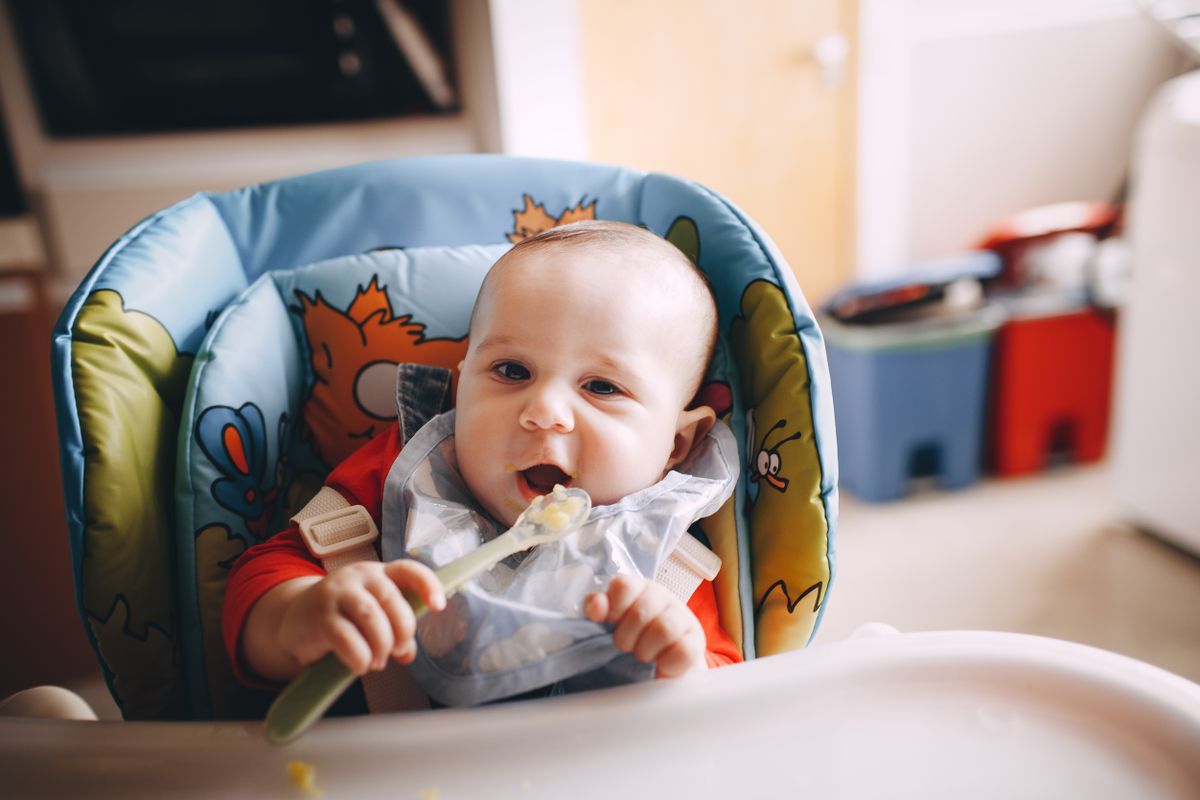
Starting Weaning: Your Honest, Slightly Chaotic Guide to First Foods
Baby rice is not the law. Here is your honest, slightly chaotic guide to weaning, from first foods and the puree-vs-BLW debate to the gear that makes mealtimes less of a battlefield.
Baby rice. For decades it was basically gospel: your baby hits six months, you mix up some bland white powder, spoon it in, and congratulations, you have started weaning. Except here is the thing. Baby rice is not the law, it is not even particularly recommended anymore, and your baby's first food can be so much more interesting than beige mush.
Weaning is one of those parenting milestones that sounds straightforward until you actually try it. Suddenly you are googling "can babies eat mango" at midnight, wondering whether you need to steam everything or if raw avocado counts, and fielding strong opinions from every relative who has ever met a child. It is a lot. But it is also genuinely fun once you stop overthinking it. 🍌
When Is Your Baby Ready?
The general recommendation is around six months, but age alone is not the full picture. Your baby is probably ready when they can sit up with minimal support, have lost the tongue-thrust reflex (meaning they do not automatically push food back out), and are showing a genuine interest in what you are eating. Staring at your toast with the intensity of a tiny food critic? That is a good sign.
Some babies are champing at the bit by five and a half months. Others need a bit longer. If yours seems happily milk-only at six months, there is no need to panic. Have a chat with your midwife or doctor if you are unsure about timing.
Purees, Baby-Led, or the Glorious Middle Ground?
This is where the internet gets shouty. Traditional weaning means spoon-feeding purees, gradually increasing texture over weeks and months. Baby-led weaning (BLW) skips the purees entirely and lets your baby feed themselves soft finger foods from the start. And then there is combination weaning, which is what most families actually end up doing regardless of what they planned.
Purees are great for getting nutrients in quickly. BLW is brilliant for letting your baby explore textures, develop their pincer grip, and feel in control. Combination weaning means you can do both, depending on the meal, the mood, and how much mess you can handle at 7am on a Tuesday.
There is no wrong answer here. The "best" approach is the one that works for your baby and does not make you want to cry into the blender.
First Foods Worth Trying
Forget the old rule about starting with plain vegetables and nothing else. Current thinking says variety early is a good thing. Here are some brilliant first foods that babies tend to love:
- Avocado - soft, packed with healthy fats, does not need cooking
- Sweet potato - roast it into wedges or mash it up, naturally sweet
- Banana - the ultimate portable first food (roll in a little ground oat if it is too slippery)
- Broccoli - steamed florets are perfect for little fists to grip
- Porridge - made with breast milk or formula, smooth and filling
- Scrambled eggs - soft, protein-rich, and most babies go mad for them
The main things to avoid before twelve months: whole nuts, honey, added salt and sugar, and anything that is a choking hazard in its current shape (whole grapes, popcorn, chunks of raw apple). Common allergens like peanuts, eggs, and wheat should actually be introduced early and often, not avoided. If your baby has eczema or a family history of allergies, speak to your doctor first.
The Gear That Actually Helps
You do not need to spend a fortune kitting out a weaning station. But a few well-chosen pieces make the whole process dramatically less stressful. Here is what is genuinely worth having.
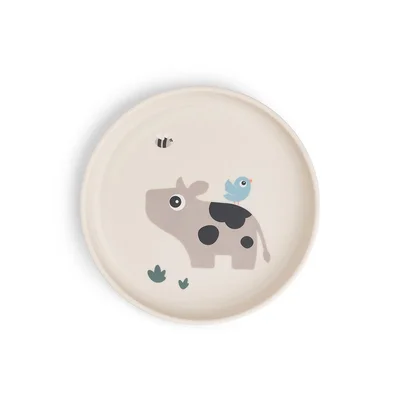
A suction plate that stays put
Nothing tests your patience quite like watching your baby launch a full plate of food off the highchair tray. A suction plate that actually sticks changes the game. Look for one with divided sections so you can offer a few different foods without them turning into one brown puddle.
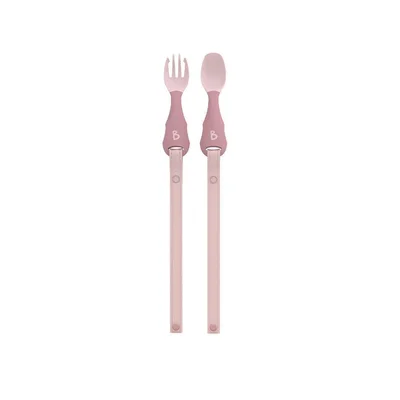
Cutlery they can actually hold
Standard baby spoons are fine, but self-feeding cutlery designed for little hands makes the transition so much smoother. Short handles, chunkier grips, and food-safe silicone that is gentle on gums. Once your baby gets the hang of stabbing a piece of pasta with a fork, you will feel like you have won the parenting lottery.
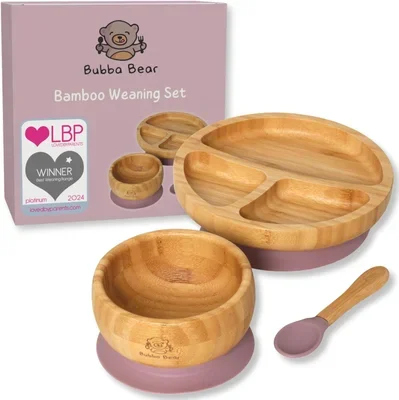
A complete weaning set for the overwhelmed
If the thought of buying plates, bowls, and cutlery separately makes your head spin, a ready-made weaning set is your friend. Everything matches, everything is the right size, and you can tick the whole lot off your list in one go. Look for sets with suction bases and BPA-free materials.

A food jar for meals on the move
Weaning does not pause just because you have left the house. A decent insulated food jar keeps purees or leftovers warm for hours, which means you can feed your baby actual food at the park instead of relying on pouches every time. It is a small investment that pays for itself within a week.
Eating Out (and Staying Sane)
Taking a weaning baby to a restaurant feels like a military operation the first time. Pack a portable silicone suction mat, bring a bib that catches crumbs, and choose places with a relaxed vibe. Most babies are happy gnawing on steamed veg or toast soldiers while you attempt to eat your own meal one-handed.
The key? Lower your expectations dramatically. If everyone leaves the restaurant alive and you managed three mouthfuls of your own lunch, that counts as a win. 🏆
When It Gets Messy (and Emotional)
Some babies take to food like they have been waiting their whole lives for this moment. Others look at a spoonful of sweet potato like you have personally betrayed them. Both are normal.
Food refusal is completely normal, especially in the early weeks. It can take 10 to 15 exposures to a new food before a baby decides they like it. Keep offering, keep it low-pressure, and try not to take it personally when they spit out something you spent 45 minutes batch-cooking.
The mess is also real. Invest in a long-sleeved bib, put a splash mat under the highchair, and accept that some meals will end with food in places you did not know food could reach. It is a season, not forever. And honestly? The photos of your baby covered head to toe in spaghetti bolognese are going to be absolute gold.
Your Weaning Starter Checklist
- A decent highchair with a removable, wipeable tray
- Suction bowls and plates (your sanity will thank you)
- Two or three long-sleeved bibs for messy meals
- Baby-safe cutlery for when they want to do it themselves
- An ice cube tray for batch-freezing purees
- A splash mat for under the highchair
- An open mind and a good sense of humour
Weaning is one of those things that feels like a massive deal until you are in the middle of it, and then it is just... Tuesday. Your baby will eat when they are ready. They will reject things, surprise you, and occasionally eat something off the floor before you can stop them. That is all part of the adventure.
Ready to build your weaning wishlist? Pop your favourites on your BubsNest registry so family and friends can help with the gear that matters. 🍽️
Ready to Create Your Baby Registry?
Start your free baby registry today and share it with friends and family.
Get Started Free