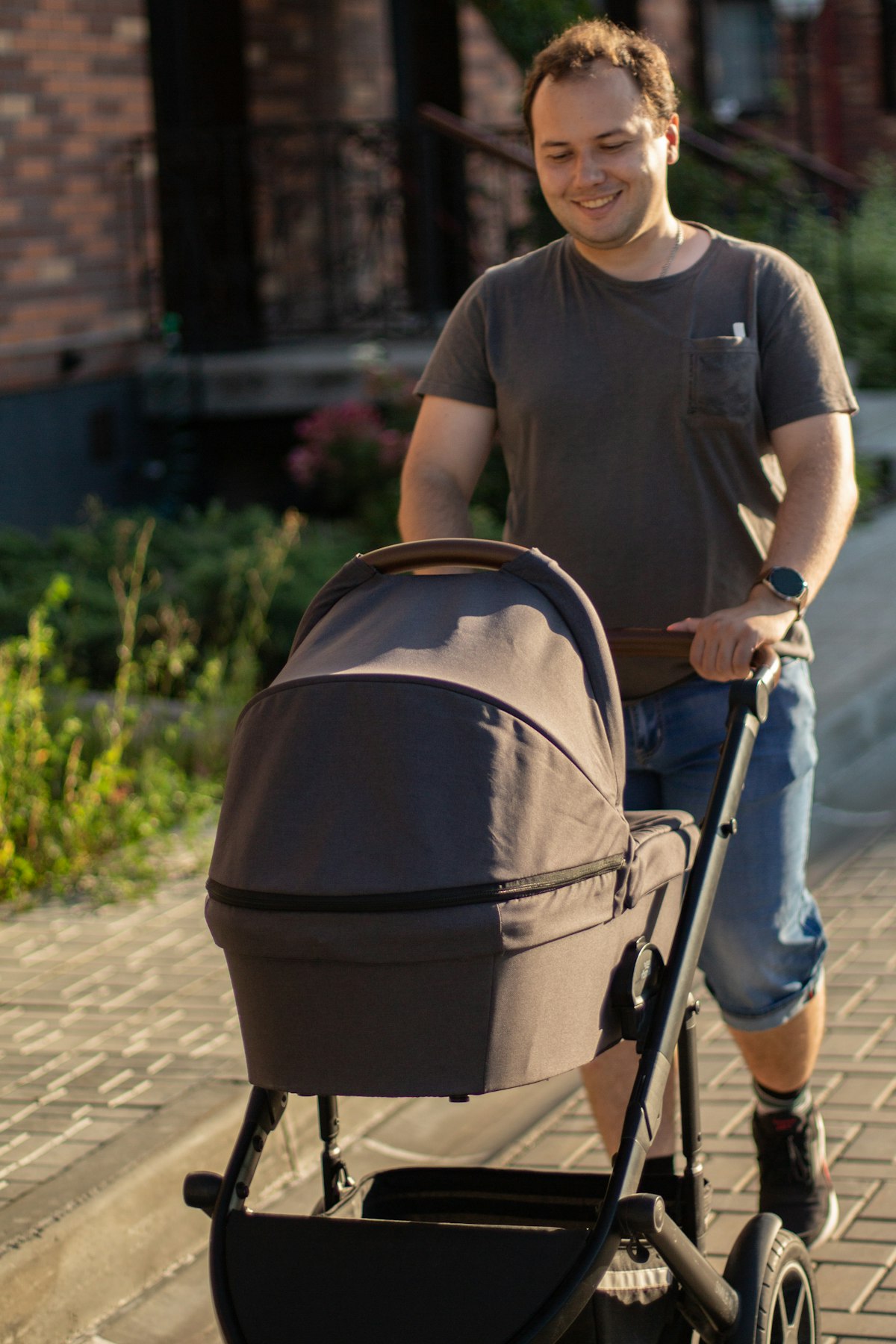
The Partners Guide to the First Few Weeks with a Newborn
Feeling useless with a newborn? You are not. Here is the practical, honest guide to night feeds, nappy changes, solo outings, and everything else partners actually need to know.
You have been told you will know what to do when the baby arrives. That some primal instinct will kick in, and you will just figure it out.
Then the baby arrives. And the person you love is recovering from the most intense physical experience of their life. And the baby is tiny and loud and seemingly unimpressed by your existence. And you are standing in the kitchen holding a bottle at the wrong angle, wondering why nobody handed you a manual for this.
Here is the thing: you are not useless. You might feel useless. But there is an enormous difference between feeling useless and actually being useless, and the fact that you are reading this means you are firmly in the first camp. 💛
This is the practical, no-nonsense guide to the first few weeks as a partner. Not the inspirational stuff. The actual stuff.
Night Feeds: This Is Where You Become Essential
If your partner is breastfeeding, you might assume night feeds are not your department. Wrong. Even if you are not the one physically feeding the baby, there is an entire operation surrounding every feed that you can own completely.
Bring the baby to your partner. Fetch water (breastfeeding thirst is genuinely unhinged). Change the nappy before or after the feed. Burp the baby afterwards while your partner falls back to sleep. That fifteen minutes of support at 3am is worth more than any grand gesture you could make during daylight hours.
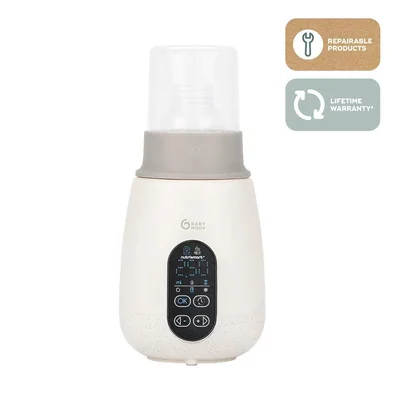
If you are bottle feeding, whether formula or expressed milk, night feeds become something you can genuinely split. A bottle warmer that sits on the bedside table means you can prep a feed without fully waking up or stumbling to the kitchen in the dark.

Nappy Changes: Own It Like a Pro
There is absolutely no reason nappy changes should default to one parent. None. And honestly, the learning curve is about three nappies long. After that, you are basically an expert.
The trick that makes everything smoother? Set up a nappy station. Not just the changing table in the nursery, but a basket or caddy in the living room with nappies, wipes, cream, a change of clothes, and a couple of nappy bags. When the baby needs changing, you do not have to trek upstairs. You just reach over, grab what you need, and get it done.
Top tip: always put the clean nappy underneath before you remove the dirty one. You will learn why exactly once.
Going Out Solo (Yes, You Can)
The first time you take the baby out alone is terrifying. Whether it is a walk to the corner shop or a trip to your parents house, there is a moment where you look at this tiny human strapped into a car seat and think, "Am I genuinely allowed to do this unsupervised?"
You are. And it gets easier unbelievably fast.
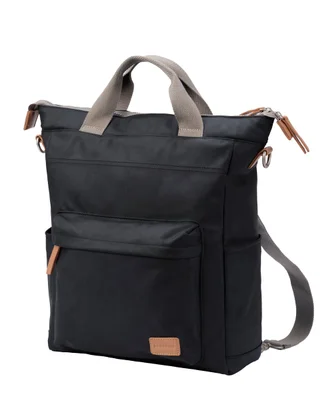
Pack a changing bag with the essentials: nappies, wipes, a spare outfit, a muslin or two, and a bottle if you need one. That is it. You do not need the entire nursery. Babies need remarkably little when you are out, and the confidence you build from those first solo trips is enormous. Your partner also gets the house to themselves for an hour, which might be the greatest gift you can offer in those early weeks. 🙌

Babywearing: The Bonding Shortcut Nobody Tells Partners About
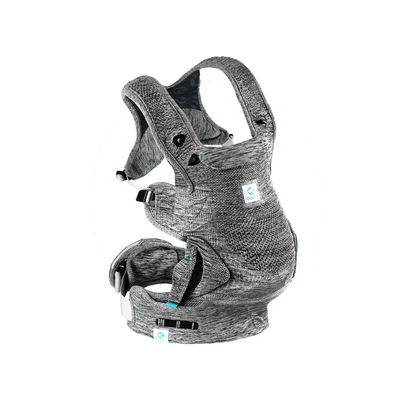
Here is something that surprises a lot of partners: babies do not actually care which parent is holding them. They care about warmth, heartbeat, and movement. That is it. And a baby carrier gives you all three.
Popping your baby into a carrier and going for a walk, doing the washing up, or just pottering around the house is one of the fastest ways to build a bond. The baby is calm because they are close to you. You feel useful because you are actively doing something. And your partner gets a genuine break, not the "I am holding the baby but shouting through asking what to do" kind. A real one.
The Stuff Nobody Warns You About
You might feel jealous of how naturally your partner seems to take to parenthood. You might feel guilty for finding the crying overwhelming. You might feel weirdly disconnected from a baby that you desperately wanted. All of this is normal, and all of it passes.
Bonding is not instant for everyone. Research suggests that many partners do not feel a strong connection until their baby starts smiling, making eye contact, or responding to their voice, which can take weeks. That does not mean something is wrong with you. It means you are human.
If the feelings do not shift, or if you notice yourself withdrawing, struggling to sleep even when the baby is quiet, or feeling persistently low, talk to your doctor. Postnatal depression affects partners too, and asking for help is not weakness. It is parenting.
Looking After the Person Who Gave Birth
This part is simple and often forgotten. The person who gave birth to your baby has been through something physically enormous. Whether it was a straightforward delivery or a complicated one, their body is recovering.
Keep the fridge stocked. Make meals without being asked. Take the baby so they can shower, nap, or just sit in silence for twenty minutes. Notice when they are struggling and do not wait for them to ask. Ask specific questions instead of "How can I help?" because that puts the mental load back on them. Try: "I am going to do the washing and make dinner. Do you want a bath or a nap first?"
That is the kind of support that actually matters. Not the flowers. Not the grand declaration. The quiet, unglamorous, consistent showing up.
You Are Going to Be Fine
The first few weeks are chaotic and exhausting and occasionally wonderful. You will make mistakes. You will put the nappy on backwards at least once. You will accidentally wake the baby the moment they fall asleep.
But you will also find your rhythm. You will discover that you have a specific way of holding the baby that calms them down, a particular bounce that works, a voice they turn towards. You will become indispensable, not because someone told you how, but because you kept showing up.
And that, genuinely, is all it takes. 💙
Building your baby wishlist together? Create your BubsNest registry and make sure your partner knows what is on it too.
Ready to Create Your Baby Registry?
Start your free baby registry today and share it with friends and family.
Get Started Free