Starting Weaning: A No-Stress Guide to Your Baby's First Foods
Everything you need to know about starting solids, from when your baby is ready to which first foods actually work, minus the overwhelm.
There are exactly three things you need to start weaning: a baby who is ready, some food, and a willingness to accept that your kitchen will never look the same again. That is it. Not the 47-item checklist doing the rounds on TikTok, not a freezer full of colour-coded purée cubes, and definitely not a degree in infant nutrition.
Weaning can feel like the most high-stakes cooking project you have ever taken on, except your harshest critic is six months old and communicates exclusively by launching broccoli at the wall. The good news? Babies have been figuring out solid food for thousands of years, and yours will too. This guide is here to help you feel calm about the whole thing. 🍌
How Do You Know They Are Ready?
The current guidance recommends starting solids at around six months. But the calendar date matters less than the actual signs of readiness your baby shows. Three things to look for:
- They can sit up with minimal support and hold their head steady. This is a safety thing, not a nice-to-have.
- They have lost the tongue-thrust reflex, meaning they do not automatically push food back out of their mouth with their tongue.
- They can pick things up and bring them to their mouth with reasonable coordination. Reaching for your toast at breakfast is a classic sign.
Waking more at night or watching you eat does not necessarily mean they are ready for solids. Babies are nosy. They watch you do everything. If they stared at your phone with the same intensity, you would not assume they were ready for a screen time schedule.
Purées, Baby-Led Weaning, or Both?
This is where the internet gets very loud. On one side: purée parents with their Nutribullets. On the other: the baby-led weaning crowd offering their six-month-olds entire chicken drumsticks. And in the middle? Most families, quietly doing a bit of both.
Traditional purées mean you spoon-feed smooth, blended foods and gradually increase the texture over weeks. It gives you a sense of control over exactly what goes in, and some babies genuinely prefer it at first.
Baby-led weaning (BLW) skips purées entirely. You offer soft finger foods from the start and let your baby feed themselves. The idea is that they explore textures, develop motor skills, and learn to regulate how much they eat.
Combination feeding is what happens in real life. A bit of mashed avocado on a spoon, a stick of steamed carrot to gnaw on, and whatever falls on the floor gets offered again. There is no wrong answer here, and your baby will let you know what they prefer.
First Foods That Actually Work
You do not need to start with baby rice. In fact, most health professionals now agree it is pretty nutritionally boring. Here are some first foods that parents consistently report going down well:
- Avocado - soft, mild, and packed with healthy fats. Mash it or cut it into strips.
- Sweet potato - roast it into chip shapes or steam and mash. Naturally sweet, which helps.
- Banana - the original grab-and-go baby food. Leave a bit of peel on the end for grip.
- Porridge - made with their usual milk. Smooth, familiar, easy to load onto a spoon.
- Broccoli florets - steamed until soft. The built-in handle makes them perfect for little fists.
- Scrambled egg - soft, protein-rich, and surprisingly popular with tiny humans.
The old advice about avoiding allergens like eggs, peanuts, and fish until after one year has been turned on its head. Current guidance actually encourages introducing common allergens early, one at a time, from six months. Speak to your GP or health professional if you have a family history of allergies.
The Gear You Actually Need
You will see weaning starter kits with 30 pieces and a price tag that makes your eyes water. Here is what genuinely earns its place in the kitchen.
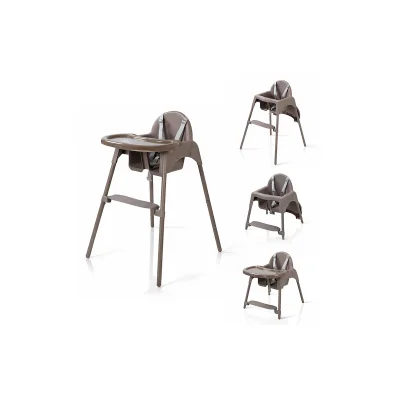
A decent highchair
Your baby needs somewhere safe and upright to sit while they eat. You do not need to spend hundreds. A simple, easy-to-clean highchair with a removable tray will serve you well from six months right through to toddlerhood. Look for one that wipes down easily, because you will be wiping it down three times a day minimum.

Suction bowls and plates
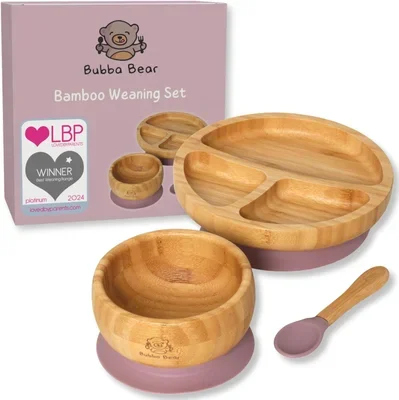
Regular bowls will be on the floor within seconds. Suction bowls stick to the highchair tray (most of the time, anyway) and give your baby something to scoop from. A set with a plate, bowl, and spoon covers the basics without cluttering every drawer.
Starter spoons
Baby spoons are shorter, shallower, and softer than adult ones. Silicone-tipped spoons are gentle on sore gums and easy to grip. Having a couple means one for you to spoon-feed with and one for your baby to wave around and occasionally get food into their own mouth.

Coverall bibs
Forget the little cotton bibs you used for milk dribbles. Weaning calls for serious coverage. Long-sleeved, waterproof, wipe-clean bibs that cover from neck to lap are the ones that will actually save your sanity (and your baby's wardrobe). Look for ones that catch food at the bottom, because gravity is not on your side.
The Mess Situation
There is no way around this, so let us lean into it. Weaning is messy. Spectacularly, creatively, sometimes-in-their-eyebrows messy. And that is genuinely fine.
Messy eating is actually part of the learning process. Squishing food between their fingers teaches your baby about texture. Smearing it across the tray is an early form of sensory exploration. Dropping it off the side is... gravity practice, presumably. 😅
A few things that help keep the chaos contained:
- Put a splash mat or old shower curtain under the highchair. Game changer.
- Strip them down to a nappy on warm days. Less laundry, more fun.
- Batch cook and freeze in ice cube trays. Individual portions mean less waste when they reject something new.
- Offer new foods alongside something you know they like. Less pressure on the unfamiliar thing.
Gagging Is Not Choking
This is the thing that terrifies every parent starting solids, and rightly so. But there is a really important distinction between gagging and choking, and understanding it will help you stay calm.
Gagging is loud, dramatic, and completely normal. Your baby coughs, splutters, might go a bit red, and then sorts themselves out. Their gag reflex is much further forward on their tongue than yours, which means it triggers more easily. It is a safety mechanism doing its job.
Choking is silent. If your baby goes quiet, cannot cough, or turns blue, that is when you need to act. Every parent starting weaning should know infant first aid. The Red Cross and St John Ambulance offer free online courses, and they take less than an hour. Do it. Seriously.
Always supervise mealtimes, always serve food in age-appropriate sizes (finger-width sticks, not small round pieces), and never rush. Your baby sets the pace.
When It Does Not Go to Plan
Some babies take to weaning like they have been waiting their whole lives for this moment. Others look at a spoonful of butternut squash like you have personally offended them. Both are normal.
It can take 10 to 15 exposures to a new food before a baby accepts it. That is not 10 to 15 mealtimes where they eat it, that is 10 to 15 times they see it on their tray, touch it, lick it, throw it, and eventually, maybe, taste it. Persistence without pressure is the goal.
Milk (breast or formula) remains the main source of nutrition until 12 months. Solids at this stage are about exploration, not calories. So if today's lunch ended up entirely on the floor, your baby is still getting what they need.
Your Weaning Checklist
Keep it simple. You need:
- A safe place for baby to sit upright
- A few bowls, spoons, and coverall bibs
- Soft, age-appropriate food cut into safe shapes
- Patience (lots of it)
- A camera, because the faces are genuinely hilarious
If you are building your baby registry or updating your wishlist, weaning gear is one of those things people love to gift because it is affordable and practical. Pop a highchair, a weaning set, and some bibs on your BubsNest wishlist and let the grandparents fight over who gets to buy them. 💛
You have got this. And your baby? They are going to love food. Eventually. Probably after throwing it a few times first.
Ready to Create Your Baby Registry?
Start your free baby registry today and share it with friends and family.
Get Started Free