Your Baby’s First 24 Hours at Home: What to Expect (and What You Actually Need)
The hospital lets you leave with a whole human being and zero instructions. Here’s what those first 24 hours actually look like, hour by hour.
You have spent months getting ready for this baby. The nursery is painted. The tiny clothes are washed. The hospital bag has been packed, unpacked, and repacked twice. And then the hospital lets you walk out the front door with an actual human being, and you are standing in your own hallway thinking... now what? 🏠
The birth bit gets all the preparation. Antenatal classes, breathing techniques, birth plans with colour-coded sections. But the moment you click that car seat into the base and drive 20mph the whole way home, you realise this is the part nobody rehearsed.
Good news: the first 24 hours at home are simpler than your brain is making them. Your baby needs about four things (food, warmth, sleep, and you), and everything else can wait. This guide walks you through it, hour by hour, so you know what is normal, what is not, and what you can safely ignore until tomorrow.
The Journey Home (and Why It Feels So Weird)
Hospital discharge usually happens within 24 hours of a straightforward birth, sometimes sooner. You will be handed a red book (your baby's personal health record), possibly some formula samples, and a vague instruction to call your midwife if anything worries you. That is it. No exam. No certificate. Just "off you go."
The car journey home is almost always absurdly slow. Every speed bump feels like a canyon. Your partner will drive like they are transporting a soufflé. This is universal and completely normal.
When you get through your front door, resist the urge to immediately start doing things. Sit down. Have a cup of tea. Let the dog sniff the baby. Text the group chat. The unpacking can wait.
The First Feed at Home
Whether you are breastfeeding, formula feeding, or doing a mix of both, the first feed at home always feels different from the ones in hospital. There is no midwife hovering to check the latch or remind you which side you were last on. It is just you and this tiny creature, figuring it out together.
If you are breastfeeding, find a comfy spot with good back support and keep water within arm's reach. Your baby will probably want to feed every 2-3 hours in these early days, sometimes more. Cluster feeding (where they seem to want milk constantly for hours) is normal and does not mean your supply is low. It is how they build it up.
If you are formula feeding, have a couple of bottles pre-sterilised and ready. In the first few days, a newborn's tummy is roughly the size of a cherry, so do not panic if they only take 30-60ml at a time. They are meant to take tiny amounts, often.
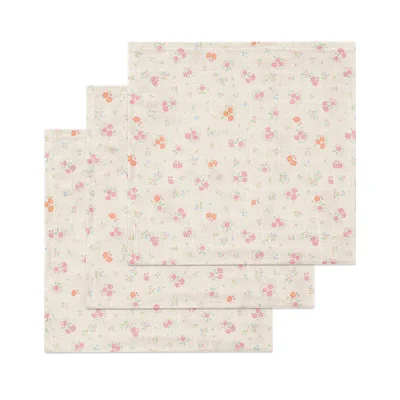
Whichever route you go, keep a stack of muslin cloths within grabbing distance. You will need them for burping, catching spit-up, mopping milk from places you did not know milk could reach, and occasionally as an emergency bib. They become your most-used item within about three hours of arriving home.

Nappy Changes: More Frequent Than You Think
A newborn can go through 10-12 nappies in 24 hours. Yes, really. Their digestive system is brand new and working overtime, and every feed tends to trigger what midwives politely call a "gastrocolic reflex" (translation: they eat, they poo).
The first few nappies will contain meconium, a dark, sticky, tar-like substance that has been building up in your baby's gut since before birth. It looks alarming but is completely normal. It does not smell, but it sticks to everything with a determination that defies physics. A thin layer of barrier cream before their first change makes the next cleanup significantly easier.
Set up a changing station wherever you will spend the most time. You do not need a dedicated changing table on day one. A changing mat on the floor or sofa works perfectly. Keep nappies, wipes (water wipes or cotton wool and warm water for newborns), nappy cream, and a spare vest within arm's length. You will get fast at this. By nappy number six, you will practically be doing it one-handed.


Sleep: Theirs and Yours
Here is the thing about newborn sleep that surprised every parent we have ever spoken to: they sleep a lot. A newborn can sleep 16-17 hours in a 24-hour period. The catch is that sleep comes in short bursts of 2-4 hours, scattered randomly across day and night. They have no idea that 3am is not a reasonable time to be wide awake and hungry.
For safe sleep, place your baby on their back in a clear cot, moses basket, or bedside crib. No pillows, no loose blankets, no cuddly toys. The room should be between 16-20°C. A lightweight swaddle can help your baby feel secure and reduce the startle reflex that wakes them up the moment you think you have finally got them to drift off.

During the day, do not tiptoe around a sleeping baby. Normal household noise (the kettle, the telly, quiet conversation) actually helps them learn the difference between daytime naps and nighttime sleep. Save the dark, quiet conditions for after 7pm.
Night One: The Real Adventure Begins
The first night at home is the bit that makes parents' stomachs flip. In hospital, there was always someone a buzzer-press away. Now it is just you, your partner (if you have one), and a baby who has absolutely no concept of bedtime.
A bedside crib is worth its weight in gold for these early weeks. Having your baby right next to you means you can hear them stir, reach over to soothe them, and feed without fully getting out of bed. It is safer than bed-sharing and infinitely more practical than getting up and walking to a separate nursery six times a night.






Take shifts if you can. One parent sleeps from 9pm to 1am while the other handles feeds and settles. Then you swap. Nobody gets a full night, but nobody gets zero sleep either. If you are solo parenting, sleep when the baby sleeps. The washing up can wait. It will always wait.
Expect your baby to be noisier than you imagined. Newborns grunt, squeak, snuffle, and make sounds that will have you googling "is my baby breathing normally" at 2am. Almost always, yes. They are just noisy sleepers. If you are worried, watch their chest rise and fall. As long as they are breathing steadily and their colour looks normal, those weird sound effects are just part of the package.
Things You Can Safely Ignore for Now
Your brain will try to convince you that everything needs doing immediately. It does not. Here is what can absolutely wait beyond the first 24 hours.
- Baths. Your baby does not need a bath on day one. A gentle top-and-tail wash (face, hands, and nappy area with warm water and cotton wool) is plenty. The full bath experience can wait a few days.
- Routine. There is no routine at this stage. Do not even try. Feed on demand, sleep when you can, and let the days blur together for a bit.
- Visitors. You are allowed to say "not today." You are allowed to say "not this week." Your baby will still be there next Tuesday, and you will be in a much better state to host.
- Thank you cards. Absolutely not. These can wait months.
- Getting dressed. Pyjamas are acceptable attire for as long as you need them to be.
When to Actually Worry
Most of the first 24 hours is just gentle chaos, and the vast majority of it is completely normal. But there are a few things that do warrant a call to your midwife or 111.
- Your baby has not had a wet nappy in 12 hours
- They feel unusually hot or cold and a thermometer confirms a temperature above 38°C or below 36°C
- They are unusually floppy, unresponsive, or difficult to wake for feeds
- Their skin or the whites of their eyes look yellow (jaundice is common and usually harmless, but it needs checking)
- You notice any bleeding from the umbilical stump that does not stop with gentle pressure
Trust your instincts here. If something feels wrong, it is always better to call and be reassured than to sit at home worrying.
The Morning After
You made it. You survived the first night, and you are reading this with a baby on your chest and a cold cup of tea on the side table. That is a win. ☕
The second day is usually a little easier, not because anything changes, but because you have already done one round of feeds, changes, and settles. You know what the sounds mean now. You have a nappy-changing rhythm developing. You have figured out which corner of the sofa is the best feeding spot.
Your midwife will visit within the first couple of days to check on you and baby. Write down any questions beforehand because you will absolutely forget them the moment she walks through the door.
One last thing: you are doing brilliantly. The fact that you are reading a guide about what to expect means you care deeply about getting this right, and caring deeply is basically the whole job description. Your baby does not need perfection. They need you, slightly sleep-deprived, probably in yesterday's pyjamas, figuring it out one feed at a time.
Ready to build your newborn essentials list? Start your BubsNest registry and let friends and family help you gather everything you need for those first precious days.
Ready to Create Your Baby Registry?
Start your free baby registry today and share it with friends and family.
Get Started Free