Your Baby's First Wardrobe: What to Actually Buy, How Many You Need, and What to Skip
First-time parents always overbuy baby clothes. Here is exactly what your newborn actually needs, how many of each item to stock, and the stuff you can safely skip.
The average first-time parent buys roughly twice as many baby clothes as their newborn will ever wear. That is not a made-up statistic to make you feel better about the impulse purchase you are currently eyeing up. It is the lived experience of almost every parent who has ever opened a drawer of pristine, still-tagged newborn outfits three months later and thought: well, that was a waste.
The problem is not that you are bad at shopping. It is that tiny clothes are impossibly cute, sizing makes no sense, and nobody actually tells you how many vests a baby goes through in a day. Until now. Consider this your no-fluff, no-judgement guide to stocking your baby's first wardrobe without going overboard. 👶
The Sizing Thing Nobody Explains
Baby clothing sizes are, frankly, chaos. A "newborn" from one brand fits a 7lb baby perfectly. From another, it would comfortably house a small cat. And "0-3 months" is such a wide range that it could mean anything from day one to practically sitting up.
Here is the rule most parents wish they had known earlier: buy less in newborn size and more in 0-3 months. Most babies are in "newborn" for about two to four weeks, sometimes less. Some bigger babies skip it entirely. The 0-3 months size is where they will actually live for a while.
A reasonable split looks like this: about a third of your basics in newborn size, and two thirds in 0-3 months. If your midwife has mentioned a bigger baby, lean even more heavily toward 0-3.
The Essentials: What You Actually Need
Forget the Instagram flat lays with seventeen coordinated outfits. Your newborn has a very simple dress code: comfortable, easy to get on and off, and machine washable. That is it. Here is what genuinely gets used.
Bodysuits (vests)
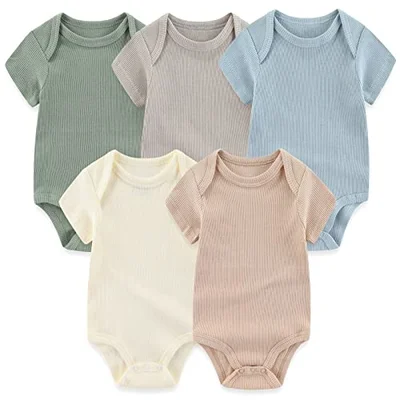
These are the workhorse of any baby wardrobe. They go under everything, they work as standalone outfits in warm weather, and you will change them more often than you think. Aim for 7-8 across both sizes. Short-sleeve for summer babies, long-sleeve for winter ones, and a mix if you are due in spring or autumn.
Mamimaka
MAMIMAKA Baby Boys Short Sleeve Bodysuit Baby Grow Cotton Vest 5-pack,0-3 Months
£13.48
£14.24

Sleepsuits (babygrows)
For the first few weeks, your baby will basically live in sleepsuits. Day and night. No one is judging. Go for zip-up over poppers if you value your sanity during 3am changes, although poppers are easier to find in smaller sizes. Stock 6-8 across your two sizes.
A starter set
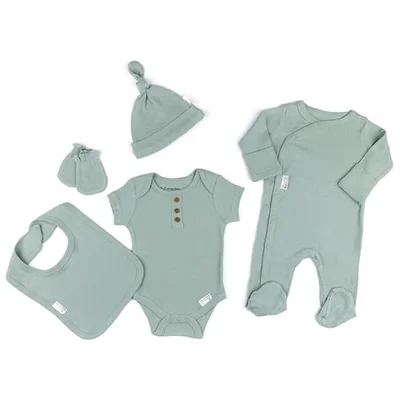
If the idea of buying everything separately feels overwhelming, a bundled set is a genuinely smart shortcut. You get the core pieces in one go, usually at a better price than buying them individually, and it takes the guesswork out of those first few days.
Hats, scratch mitts, and socks
You will need 2-3 hats for the early days (hospitals are warm but the car park is not). Scratch mitts are useful for the first couple of weeks before you get brave enough to trim those tiny nails. Socks are a losing battle, they will come off constantly, but buy 4-5 pairs anyway.
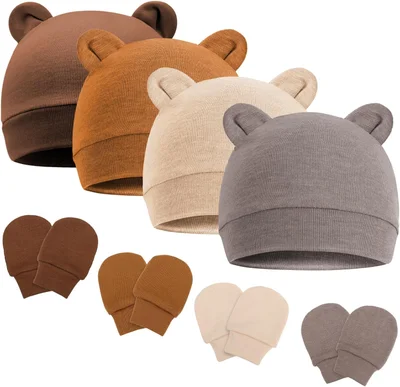
Cardigans or layers
Two light cardigans will cover you. Babies regulate temperature differently to adults, so layering is more useful than one thick jumper. A cotton cardigan over a bodysuit gives you flexibility without overheating.
The "Going Out" Outfit Question
You will want at least one or two nicer outfits. Not for the baby's benefit, obviously. They could not care less. But for those first visitors, the trip to get registered, the inaugural walk to the coffee shop. Having something slightly more put-together than a milk-stained sleepsuit helps you feel like a functioning human. 🤍
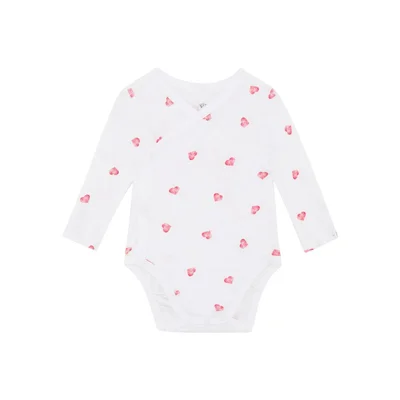

One tip: make sure it still has easy nappy access. The most beautiful outfit in the world becomes your worst enemy if it requires a full costume change every time there is a dirty nappy.
What You Can Safely Skip
This is the bit that saves you actual money.
- Shoes. Your baby is not walking. They are not even standing. Shoes on a newborn are purely decorative and they will kick them off within seconds. Save shoe shopping for when they are actually cruising.
- Jeans or structured trousers. Stiff denim on a baby who spends 90% of their time curled up is uncomfortable for them and impractical for you. Soft leggings or joggers are fine when they are bigger, but for now, sleepsuits win.
- Anything labelled "dry clean only." You will laugh about this later.
- Excessive newborn sizing. Already covered, but worth repeating. Three or four newborn sleepsuits and a handful of vests is plenty. Do not buy a full wardrobe in a size they might wear for ten days.
- Themed outfits you will only use once. That Halloween pumpkin suit is adorable. It will also fit for approximately one day. If someone gifts you one, brilliant. But it is not a wardrobe essential.
Seasonal Adjustments
The core list stays the same regardless of when your baby arrives, but the details shift.
Summer babies need more short-sleeve bodysuits, a couple of lightweight rompers, and a sun hat. Keep a light muslin blanket for pram walks rather than layering up. Overheating is a bigger risk than being cold.
Winter babies need a warm outer layer for the car seat to pram transfer, an extra cardigan or two, and a cosy hat that actually stays on. Fleece-lined sleepsuits are lovely but can be too warm indoors, so keep them for outings.
In-between babies (spring and autumn) need the most flexibility. Layers are your best friend here. A vest, a sleepsuit, and a cardigan give you three temperature options without buying specialist gear for weather that changes every twenty minutes.
The Cheat Sheet
Pin this to your fridge, screenshot it, send it to anyone who asks what to buy:
- 7-8 bodysuits (mix of newborn and 0-3)
- 6-8 sleepsuits (mix of newborn and 0-3)
- 2-3 hats
- 2-3 pairs of scratch mitts
- 4-5 pairs of socks
- 2 light cardigans
- 1-2 "nice" outfits
- 1 warm outer layer (seasonal)
- A stack of muslins (these are not clothing but you will use them for everything)
That is it. That is the whole list. Everything else is optional, gifted, or impulse-bought from the supermarket at 11pm because it had ducks on it and you were hormonal. No judgement on that last one.
One More Thing: The Registry Trick
If you are building a baby wishlist, clothing is one of the easiest categories to share with friends and family. People love buying tiny outfits, so lean into it. Put the practical stuff (multipacks of vests, sleepsuits in 0-3) on your list and let the cute novelty bits be the surprise gifts. That way you end up with a wardrobe that actually functions, plus a handful of adorable extras you did not have to choose yourself.
Your baby does not need a capsule wardrobe worthy of a lifestyle blog. They need soft, comfortable layers that you can wash at 40 degrees and put back on tomorrow. Get the basics right, and everything else is just a bonus.
Ready to Create Your Baby Registry?
Start your free baby registry today and share it with friends and family.
Get Started Free