Newborn Skincare: Your No-Fuss Guide to Looking After That Tiny Skin
Your newborn probably needs far fewer skincare products than you think. Here is what actually matters, from cradle cap to nappy rash, and when to leave well alone.
Here is a secret that the baby skincare aisle really does not want you to know: for the first few weeks of life, your newborn's skin needs almost nothing at all.
Seriously. That impossibly soft, slightly peely, occasionally blotchy skin? It is doing exactly what it is supposed to do. And the seventeen different lotions, washes, and creams staring at you from the shelf are mostly solving problems your baby does not have yet.
That said, there are a handful of genuine skin concerns that crop up in the early weeks and months, and knowing what is normal, what needs a simple fix, and what deserves a chat with your GP can save you a lot of midnight googling. So here is your no-nonsense guide to newborn skincare, minus the overwhelm. 🛁
Why Newborn Skin Is Different
Your baby's skin is about 30% thinner than yours. It loses moisture faster, absorbs things more easily, and its protective barrier is still developing. That is why newborns are more sensitive to fragrances, harsh chemicals, and temperature changes than older babies.
In the first week or two, you might notice your baby's skin peeling, especially around the hands, feet, and ankles. This is completely normal. It is just the outer layer adjusting to life outside the womb, where it was floating in amniotic fluid for nine months. No cream needed. It will sort itself out.
You might also see tiny white spots on their nose and cheeks (called milia), little red blotches that come and go, or even baby acne around week two or three. Again, all normal. The urge to slather something on will be strong. Resist it.
The Less-Is-More Rule
For roughly the first month, plain water is your best friend. Most midwives recommend topping and tailing (face, hands, and nappy area with cotton wool and warm water) rather than full baths in those early days. Your baby's skin has a natural coating called vernix that protects it, and washing it off too quickly can leave skin dry and irritated.
When you do start bathing, keep it short (five to ten minutes), keep the water lukewarm (around 37°C), and skip anything with fragrance, soap, or alcohol in the ingredients list. Your baby does not need to smell like a tropical garden. They need to smell like a baby.
Choosing a Baby Wash
Once you move beyond the water-only stage, usually around four to six weeks, you want something genuinely gentle. The word "gentle" gets thrown around a lot on baby product packaging, so here is what to actually look for:
- Fragrance-free (not just "lightly scented")
- Soap-free and pH-neutral
- Free from SLS, parabens, and alcohol
- Dermatologically tested on sensitive skin
A calendula-based wash is a lovely option. Calendula has been used for centuries for its soothing properties, and it is gentle enough for even the most sensitive newborn skin.
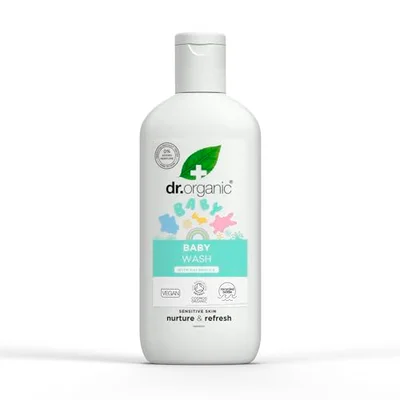

One bottle of something simple will last you ages. Babies are tiny, they do not get that dirty, and a little goes a long way.
Nappy Rash: The One You Will Probably Deal With
If there is one skin issue that almost every parent encounters, it is nappy rash. That angry red patch on your baby's bottom that makes you feel like you have somehow failed at nappy changes. You have not. It happens to virtually everyone.
Nappy rash is usually caused by prolonged contact with wee or poo, friction from the nappy, or sometimes a reaction to wipes or a new brand of nappy. The fix is straightforward:
- Change nappies frequently, especially after a poo
- Let your baby have some nappy-free time on a towel (yes, there will be accidents)
- Use a barrier cream at every change to protect the skin
- Pat dry rather than rubbing
A good barrier cream creates a waterproof layer between your baby's skin and the moisture in their nappy. Look for one with zinc oxide or natural beeswax, and apply a thick layer, like you are icing a cake. Seriously, do not be shy with it.
If the rash does not improve after a few days, looks blistered, or spreads beyond the nappy area, pop in to see your GP. It might be a fungal infection that needs a different treatment.
Cradle Cap: Crusty but Harmless
At some point in the first few months, you will probably notice yellow or brown scaly patches on your baby's scalp. Welcome to cradle cap, the skin condition that looks alarming and is completely harmless.
Cradle cap is caused by overactive oil glands (thanks, leftover hormones from pregnancy) and it is not caused by poor hygiene. It does not itch, it does not hurt, and it will clear up on its own eventually. But "eventually" can mean months, and in the meantime, it does look a bit... crusty.
If you want to help it along:
- Massage a small amount of coconut oil, olive oil, or a dedicated cradle cap oil into the scalp and leave it for 15 to 20 minutes
- Gently brush away the loosened flakes with a soft bristle brush or silicone scalp brush
- Wash as normal afterwards
- Repeat every few days until it clears
The key word is gently. Picking at the scales can irritate the skin underneath and make things worse. A soft silicone brush designed for babies does the job brilliantly without any scratching.

Dry Skin and Eczema
Some babies have naturally drier skin than others, especially in winter or in centrally heated houses. If your baby's skin looks a bit flaky or rough in patches, a fragrance-free baby moisturiser after bath time can help. Apply it while the skin is still slightly damp to lock in moisture.
Eczema is more persistent. It shows up as red, itchy, rough patches, often in the creases of elbows, behind the knees, or on the cheeks. About one in five babies develops eczema at some point, so it is very common.
The basics of managing baby eczema:
- Moisturise frequently, at least twice a day, with an emollient
- Use fragrance-free everything (wash, laundry detergent, wipes)
- Keep baths short and lukewarm
- Dress baby in soft cotton rather than wool or synthetic fabrics
- Keep nails trimmed to reduce scratching damage
If you are starting from scratch and want a set that covers the basics, a starter skincare kit designed for sensitive baby skin takes the guesswork out of it.
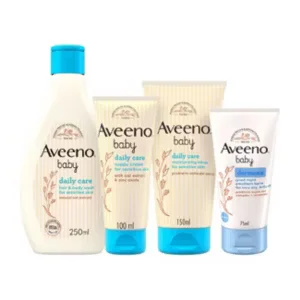

If the eczema is severe, weeping, or not responding to regular moisturising, your GP can prescribe a mild steroid cream. Do not be afraid of it. Used correctly and for short periods, it is safe and effective.
Summer Sun and Baby Skin
Babies under six months should be kept out of direct sunlight altogether. Their skin is simply too thin to handle UV exposure, and most sunscreens are not recommended for very young babies because their skin absorbs the ingredients more readily.
For older babies, use a mineral sunscreen (look for zinc oxide or titanium dioxide) with at least SPF 30. Reapply every two hours and after any water play. A wide-brimmed hat and lightweight long sleeves are your best allies on sunny days. ☀️
When to See Your GP
Most newborn skin things are entirely normal and sort themselves out without any intervention. But there are a few signs worth getting checked:
- A rash that does not fade when you press a glass against it (do the glass test immediately)
- Blistering, weeping, or crusting that looks infected
- Widespread rash with a fever
- Eczema that is not responding to regular moisturising after a couple of weeks
- Any rash you are simply not sure about
You know your baby best. If something does not look right, it is always worth asking. Your GP or health visitor would far rather see you for something minor than have you worrying at home.
The Short Version
Newborn skincare is mostly about doing less, not more. Water first, simple products later, and a good barrier cream for nappy changes. The peeling, the spots, the cradle cap, it is all normal and it all passes. Your baby's skin is doing an incredible job of figuring out how to exist in the world. Give it a bit of time, a lot of gentleness, and save the seventeen-step skincare routine for yourself. 🍼
Building your baby essentials list? Add your favourite skincare picks to your BubsNest registry so family and friends know exactly what to grab.
Ready to Create Your Baby Registry?
Start your free baby registry today and share it with friends and family.
Get Started Free