Pregnancy Insomnia: Why You Can't Sleep and What Actually Helps
Up to 78% of pregnant women struggle with sleep. Here is why pregnancy wrecks your rest, the positions and products that genuinely help, and when to talk to your midwife.
Up to 78% of pregnant women report significant sleep problems. Seventy-eight percent. If you are reading this at some ridiculous hour, propped up on four pillows with a dead leg and a bladder that apparently holds 3ml, you are in very, very good company.
Pregnancy sleep is one of those things that sounds like it should be easy. You are exhausted. You are growing an entire human. Surely your body would just... let you rest? But no. Your body has other plans, and those plans apparently involve heartburn, hip pain, and needing the loo every 45 minutes. 🌙
Here is the good news: you are not broken, this is genuinely normal, and there are things that actually help. Not miracle cures, but practical stuff that can turn a terrible night into a manageable one.
Why Pregnancy Wrecks Your Sleep
It is not just one thing. It is a whole team of things, all conspiring against you at once.
In the first trimester, progesterone surges make you feel like you could nap standing up, but also wake you at odd hours feeling vaguely nauseous. By the second trimester, heartburn and vivid dreams join the party. And by the third trimester, your bump makes every position uncomfortable, your bladder is being used as a trampoline, and restless legs decide to make their debut at exactly the moment you close your eyes.
Add in the mental load of preparing for a baby, random worries about whether you packed the hospital bag properly, and the fact that you physically cannot lie on your front anymore, and honestly it is a miracle anyone sleeps at all.
Sleep Positions That Actually Work
From around 28 weeks, sleeping on your side is recommended. Left side is generally considered ideal because it improves blood flow to your baby, your uterus, and your kidneys. But if you wake up on your right side, do not panic. The important thing is avoiding flat on your back for long stretches, which can put pressure on major blood vessels.
The trick is building yourself a pillow fortress. One between your knees to align your hips. One behind your back so you do not roll. One under your bump for support. You will take up approximately 85% of the bed. Your partner will learn to cope.
Or, if you want to skip the pillow Tetris, a proper pregnancy pillow does the job of all three in one. You wrap yourself around it like a koala and suddenly everything feels supported.
Worth every penny. Genuinely. The kind of thing you will wonder how you managed without once you have tried it.
Setting Up Your Room for Better Sleep
Your bedroom environment matters more during pregnancy than it ever did before. Three things make the biggest difference: darkness, temperature, and sound.
Darkness first. Your body produces melatonin in response to darkness, and even small amounts of light, from streetlamps, phone chargers, or the landing light your partner leaves on, can interfere with that. If blackout curtains feel like too much commitment (especially if you are renting or just cannot face putting up a rail right now), blackout window film is a brilliant alternative. It sticks directly onto the glass, blocks out light completely, and peels off without damage when you are done.


This also comes in handy once baby arrives. A properly dark room is one of the single best things you can do for newborn sleep, so you are setting yourself up for later too.
Now, the bathroom trips. You will need to get up. Probably multiple times. A soft nightlight that does not blast you awake with overhead lighting is worth its weight in gold. Something dim enough to see by, warm enough in tone that it does not reset your brain to "fully awake" mode.
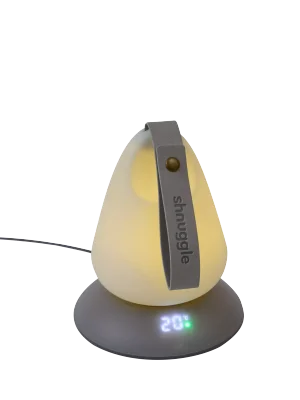


Pop it in the hallway or bathroom and you can navigate without switching on the main light. Small thing, big difference.
The Overheating Problem
Pregnancy increases your blood volume by up to 50%. Your metabolic rate goes up. Your core temperature runs higher. All of which means you will probably feel warmer than usual, especially at night.
The instinct is to kick off the duvet entirely, but then you get cold at 4am and wake up fumbling for covers. A better solution is swapping your regular duvet for something lighter and more breathable. Cellular blankets are brilliant for this because the little holes allow air to circulate, so you stay comfortable without overheating.



Layer it with a thin sheet so you can add or remove coverage as your temperature fluctuates through the night. Much easier than wrestling a full duvet on and off while seven months pregnant.
What You Wear Matters Too
Breast tenderness is one of pregnancy's earliest symptoms, and for many women it sticks around. Sleeping braless can be uncomfortable, but a regular bra digs in and creates pressure points that keep you awake.
A soft, stretchy sleeping bra designed for pregnancy is a simple fix. No underwiring, no clasps digging into your ribs, just gentle support that moves with you when you roll over. Look for one that doubles as a nursing bra too, so it keeps working for you after birth.

Habits That Actually Help
Products are great, but a few habit shifts can make just as much difference.
- Move your body during the day. Even a 20-minute walk makes a measurable difference to sleep quality. Just keep it gentle and not too close to bedtime.
- Front-load your fluids. Drink plenty of water during the day but ease off in the two hours before bed. You will still need the loo, but maybe twice instead of five times.
- Eat earlier. Heartburn is worse when you lie down on a full stomach. Try to finish your evening meal at least two hours before bed, and keep a couple of antacids on your bedside table for the nights it strikes anyway.
- Bore yourself to sleep. If you wake up and cannot drop off again within 20 minutes, put on a sleep podcast or audiobook, something deliberately monotone. "Bore Me To Sleep" on Spotify is popular for a reason. It works.
- Screens down early. You have heard it before. You will hear it again. Blue light from your phone genuinely suppresses melatonin. Swap the scroll for a book or a bath.
When To Talk To Your Doctor or Midwife
Some sleep disruption is completely normal in pregnancy. But if you are consistently getting fewer than four or five hours, if your mood is suffering, or if you are experiencing symptoms like heavy snoring, gasping, or leg movements that jolt you awake, it is worth having a conversation with your midwife or GP.
Sleep has a direct impact on mental health, and there is no prize for toughing it out. Your care team will have seen it a thousand times before and can offer support, whether that is practical advice, a referral, or just reassurance that this will pass.
Pregnancy insomnia is temporary. It does not last forever, even though it absolutely feels like it will. In the meantime, be kind to yourself, nap when you can, and accept that your bed now belongs to you, your bump, and approximately seven pillows. 💤
Building your baby registry? Add the sleep essentials that will actually make a difference to your BubsNest wishlist so your loved ones know exactly what to get you.
Ready to Create Your Baby Registry?
Start your free baby registry today and share it with friends and family.
Get Started Free